
Opportunity Criteria
Chief Medical Informatics Officer - Ambulatory
JOB PURPOSE:
The Ambulatory Chief Medical Information Officer (CMIO) is a practicing physician executive responsible for advancing the use, optimization, and maintenance of medical information systems in the ambulatory setting. This role streamlines EHR and related technologies to enhance provider efficiency and clinical care quality. Reporting to the Associate Chief Health Informatics Officer, the Ambulatory CMIO develops and executes technology strategies in collaboration with ambulatory service line Chiefs and clinical and operational leaders to improve healthcare quality, efficiency, and population health. The Ambulatory CMIO applies usability and user experience principles to solution design, engages care teams to ensure IT initiatives meet clinical needs, and promotes adoption of systems aligned with enterprise priorities. Oversight includes associate CMIOs and provider informaticists.
MINIMUM EDUCATION REQUIRED:
MD (Medical Doctor) or DO (Doctor of Osteopathic Medicine)
MINIMUM EXPERIENCE REQUIRED:
10 years of clinical medical practice experience including clinical IS experience
MINIMUM LICENSURE/CERTIFICATION REQUIRED BY LAW:
Active Medical License
Board Certification in Medical Specialty
QUALIFICATIONS:
Well-respected physician with a strong clinical reputation, experience optimizing the use of technology, and prior experience working on multi-disciplinary teams.
ADDITIONAL QUALIFICATIONS:
Epic Physician Builder Certification (preferred)
Subspecialty certification in Clinical Informatics (preferred)
Leadership experience in Clinical IS
Active clinical experience preferred OR 10 years of clinical experience which may include residency and/or fellowship training.
KNOWLEDGE, SKILLS, ABILITIES
· Customer service-oriented approach to working with stakeholders and team members.
· Strong understanding of clinical workflow in both primary care and specialty outpatient settings and experience with the use of clinical information technology to improve care delivery.
· Understand clinicians' needs from different perspectives of the care team, the benefit of clinical information systems, and have the ability to educate physicians and other clinicians on these topics.
· Able to apply usability, design, and user experience principles to solution design.
· Excellent written, verbal, communication and interpersonal skills and the ability to work effectively with diverse personalities, practicing clinical professionals, IT personnel, operations leaders, and staff.
· Self-directed with the ability to work collaboratively with various stakeholders and teams.
· The ability to make quality, independent decisions.
· Time management and organizational skills with the ability to balance clinical demands with informatics responsibilities.
· Strong analytical and problem-solving skills.
· Demonstrate effective collaborative leadership style, and creative thinking with high energy and enthusiasm.
· Leadership experience working with diverse stakeholders at all organizational levels.
· Strong understanding and/or experience with the business side of medicine, operational planning and execution, and budgeting.
· Have the ability to develop tactics based on organizational and informatics strategy and oversee implementation of tactics which advance strategy.
· Strong understanding of quality metric, workflows, and reporting.
· Follow and understand major trends related to regulation, payors, clinical systems, information technology, vendors, informatics, and communications as they affect healthcare delivery
KEY RESPONSIBILITIES:
1. Oversee and share responsibility for developing programs and initiatives that improve the use of and support for clinical technologies that enhance efficiency and care quality in the Ambulatory setting.
2. Able to dedicate 80% of time to Informatics and will be providing patient care in clinic 20% of the time.
3. Work with physicians, nurses, other clinicians, and IT staff to gain support for designing processes and applications that maximize their time and communication abilities.
4. Serve as a liaison between clinical staff, operations, and IS Executive team.
5. Help standardize processes, procedures, and adoption of technology across Piedmont Healthcare.
6. Enhance patient safety and quality of care in line with organizational goals.
7. Support Clinical Governance Councils and other system quality initiatives.
8. Manage and support multiple clinical service lines/specialties in the optimization of the EHR and associated technologies.
9. Meet regularly with specialty or service lines to ensure effective, bi-directional communication.
10. Educate, coach, and support physicians on plans that enhance organizational patient care needs.
11. Develop and implement informatics educational programs for physicians.
12. Work with the system Informatics leadership and physician leaders to promote and support clinical information systems; implement strategies and tactics that align with the strategic vision and priorities for enterprise-wide informatics.
13. Liaison between physician and information systems leadership and management.
14. Facilitate governance teams to evaluate, and support the adoption of clinical programs and advise the CHIO on decisions and concerns.
15. Promote the role and importance of clinical IS to improve clinical safety and efficiency.
16. Analyze current and future workflows of physicians, nurses and other clinicians on clinical IS systems.
17. Supervise activities of associate CMIO and physician informaticists.
18. Represent the interests of the service line and key stakeholders, as needed, in system meetings both clinical and administrative.
19. Collaborate with Epic trainers and Training leadership to optimize physician and clinical support training for both new and existing employees.
20. Handle & protect the information in accordance with hospital & system policies, HIPAA requirements, and the highest level of ethical standards.
21. Report all security events/risks, potential events, and departmental/role/user level issues to appropriate recipients
Disclaimer
The above information is intended to describe the general nature and level of work being performed by people assigned to this job. It is not intended to be an exhaustive list of responsibilities, duties, and skills required of personnel so classified.
Keeping Fayette Healthy Since 1997
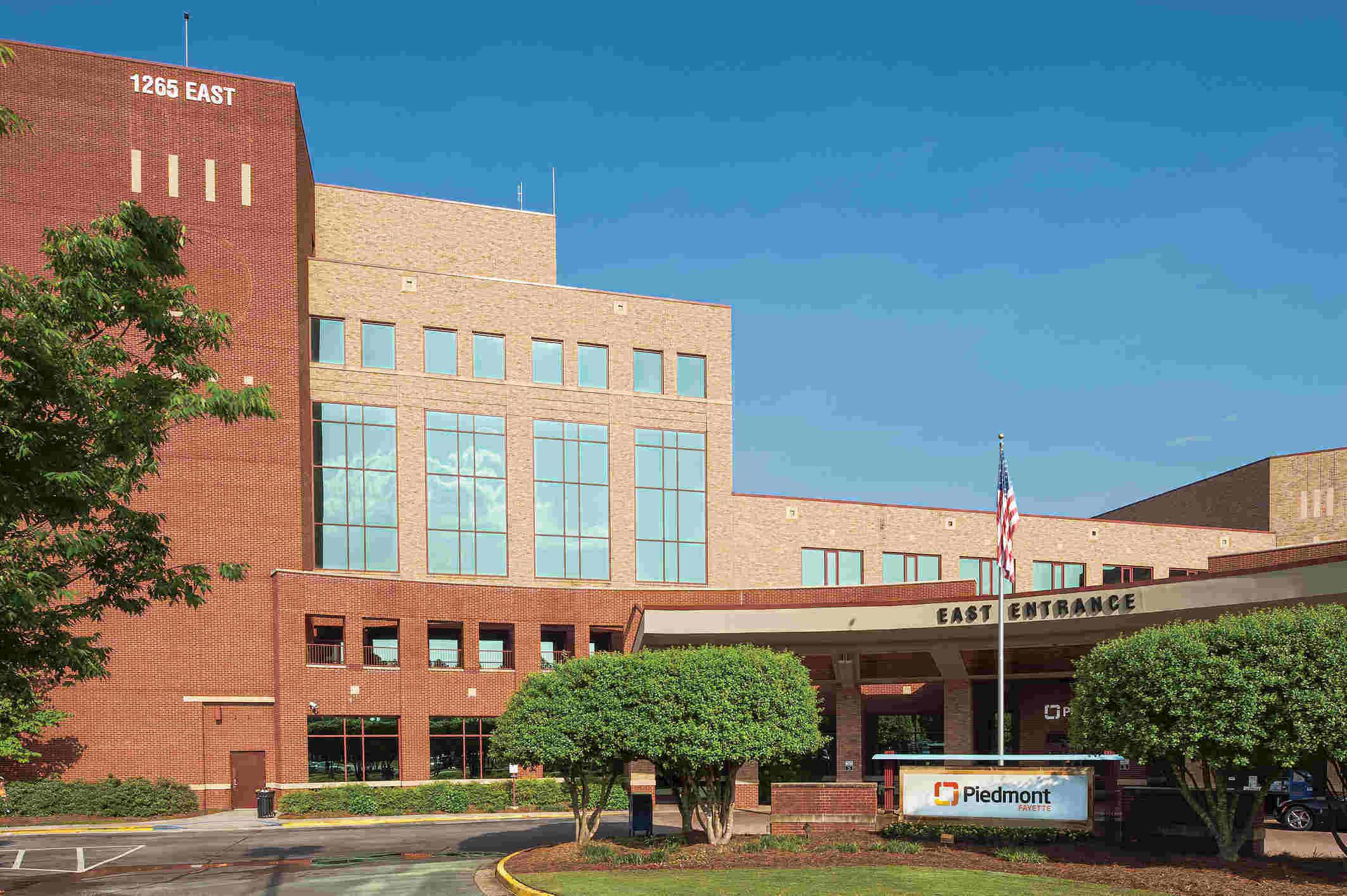
Piedmont Fayette Hospital is a 282-bed, acute care community hospital that combines clinical excellence with a focus on wellness, high-quality and exceptional service. Serving Fayette County and surrounding communities, Piedmont Fayette offers 24-hour emergency services, medical and surgical services, and obstetrics/women’s services. From leading-edge medical technology in robotic surgery, digital imaging, diagnostics, rehabilitation, cardiovascular services, and hyperbaric medicine/wound care services to its comprehensive cancer center, Piedmont Fayette is committed to making a positive difference in every life we touch.
Piedmont Fayette Hospital has received the Healthgrades America’s 50 Best Hospitals Award for 5 consecutive years. The 50 recipients of the America’s 50 Best Hospitals Award are distinguished for overall clinical excellence across a broad spectrum of care.
Key Facts:
- Located in Fayetteville, Georgia
- Staffed by more than 1,600 employees and a medical staff of over 500 physicians
- Provides 24-hour emergency services, plus major medical, surgical and diagnostic care, including:
- Cancer Care
- Heart Care
- Orthopaedic Care
- Women’s Care
- Sleep Services
- Wound Care
Our medical professionals have access to leading-edge medical technologies like robotic surgery facilities and a state-of-the-art cancer center that offers complete therapy, disease management, prevention and wellness.
At Piedmont Fayette Hospital, we’re committed to delivering innovative, world-class healthcare – with a compassionate touch – that’s close to home.
Piedmont Healthcare
Piedmont Healthcare is a private, not-for-profit health system and a recognized leader in delivering safe, high-quality, patient-centered care. Across Georgia, Piedmont serves communities representing 85% of the state’s population through 27 hospitals, 113 immediate care locations, 1,875 Piedmont Clinic physician practice locations, and more than 3,600 Piedmont Clinic members. With nearly 50,000 caregivers and more than 4.5 million patients served, Piedmont offers physicians the opportunity to practice in a growing, mission-driven organization committed to making a positive difference in every life we touch.
About the Community
Peachtree City is the county's largest city and offers superb lifestyle amenities. You will be able to enjoy the best of both worlds, small town living with access to all of the amenities of a metropolitan lifestyle. There are abundant lakes and golf courses to set the stage for raising your family in a fun community with great schools while supporting a diverse community. In addition, you will be within an easy driving distance to downtown Atlanta (less than 30 miles). There you will find professional sports, major cultural venues, an array of recreational and entertainment activities, and the largest concentration of colleges and universities in the Southeast.
Facility & Address
Piedmont Fayette Hospital
- 1255 Highway 54 West Fayetteville, GA 30214
Links
Contact Information
Amber Green Physician Sourcing Recruiter
- Phone:470-409-0536
- Email:Click to email
Photos
Video
1110026LS
 When making contact with the person who posted this opportunity, please tell them you saw their posting on PracticeMatch.
This site is only intended for job seekers to contact the organizations posting jobs. Use of this site for solicitation and other unintended purposes is prohibited. Job ads are supplied by the employer. PracticeMatch does not verify postings and is not responsible for legal compliance. Employers are solely responsible for complying with all applicable job-posting and pay-transparency requirements.